Float Campaigns
A Float campaign markets one candidate to many buyers. It opens with an anonymised tease, drips detail over a fortnight, and only names the candidate in the final email — so you find out who is genuinely interested before you give anything away.
Two different things are both called "Float"
The Float report is a document — built for a single candidate, saved, refined, downloaded as a PDF, or shared as an Anonymised Profile link. The Float campaign is a drip sequence — a multi-step email campaign built around one candidate's report. A Float campaign always carries an anonymised report with it, but generating a report on its own does not create a campaign, and building a campaign reuses the newest report rather than duplicating it. This page covers the campaign; see the sections below for where the report fits in.
Float vs a Normal Campaign
A standard campaign sells you — your service, your desk, your track record. A Float sells a person. That changes the shape of the sequence: instead of building a case for working together, it builds curiosity about a specific candidate and converts it into a conversation.
It is the classic reverse-market call, written down and sent to a mapped list instead of dialled one at a time.
The Sequence
Every Float runs tease → proof → reveal across three to five touches, every second day, so you have room to call or message between emails. A three-touch Float finishes on day four, a five-touch on day eight — deliberately short, because you are marketing one person who is on the market right now.
Three touches is the default and the shortest allowed; five is the maximum. Set it with the Touches control when you create the campaign.
Anonymous Until the Reveal
The candidate stays unnamed for the whole drip. The pitch is carried by an anonymised profile — specific enough to be worth replying to, safe enough to send cold to companies you do not have terms with.
Clients who want to know more click a tracked link to see the full profile. That click is the signal: you learn who is actually buying before the name is in the market, and before a competitor can work backwards from your email.
Building One
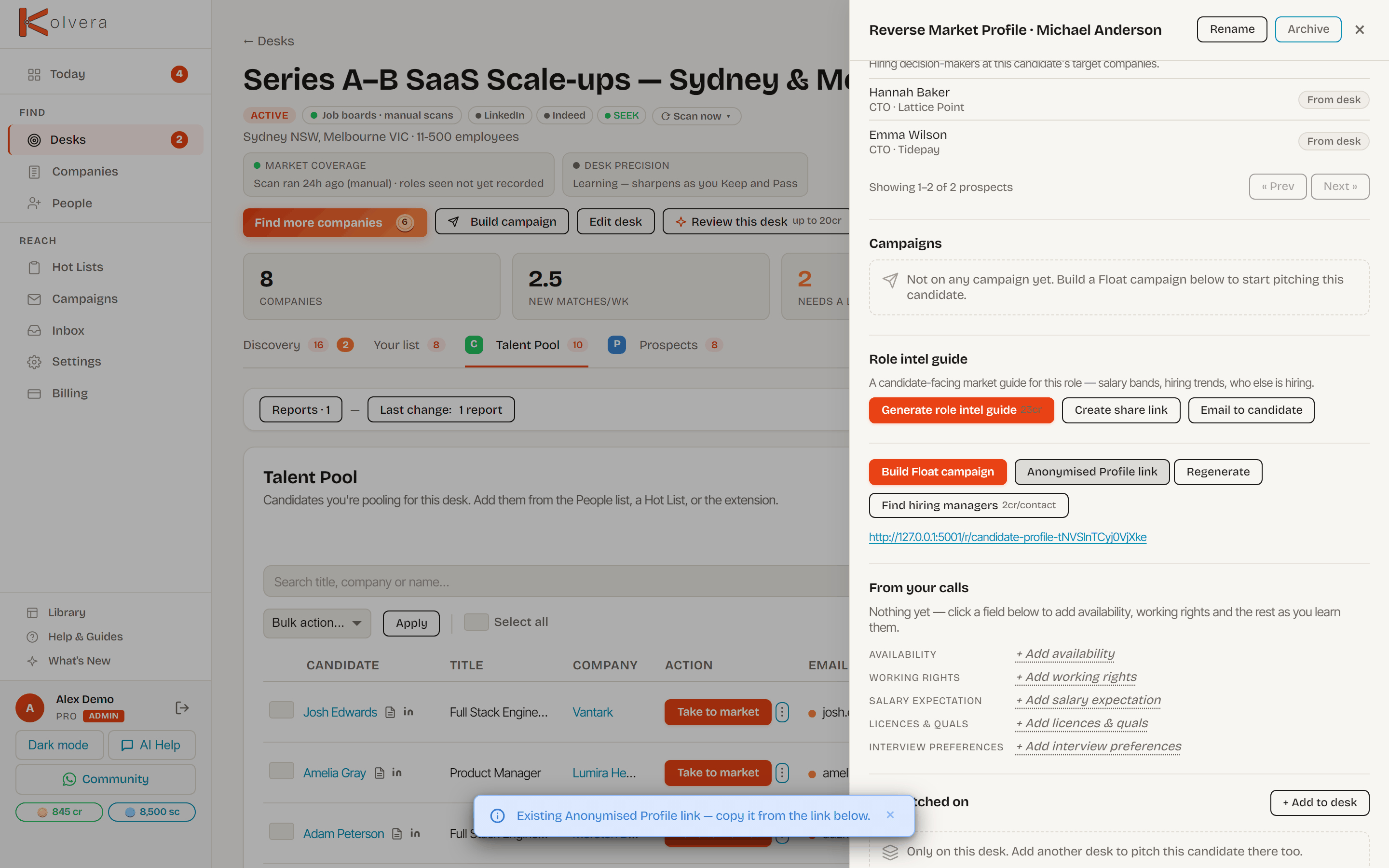
- Open the candidate's Reverse Market Profile drawer from their desk's Talent Pool tab, and click Build Float campaign. That opens campaign creation pre-loaded with this profile; linking a profile auto-selects the Float framework unless you pick another one yourself.
- The generated copy is written from that specific candidate's Anonymised Profile, not a generic template.
- Set your touch count, review the drafted steps, and enrol the prospects from the profile's mapped companies.
Replies stop the sequence automatically, as with any campaign — when someone bites, you take over.
The Float Profile Itself
The Anonymised Profile is generated from every source attached to the candidate: call notes, transcripts, CV, profile notes, LinkedIn and emails. You review and approve it before anything is sent, and it is yours to edit. Approved profiles are listed in your Library and on the candidate's record.
Generating one on its own
You do not need a campaign to produce a float report. Open a candidate's People file, go to their Reports tool tab, click New Report, then Generate Draft. That is also how you produce one for a client who asked for a specific candidate rather than a market you are working — and it's the same report the Reverse Market Profile drawer's Anonymised Profile link builds or reuses.
Sections & templates
The default template has six sections — summary, experience overview, qualifications and work rights, availability and logistics, employment history, and additional information. Toggle sections on or off, reorder them, and adjust the AI instructions to match how your agency writes. Templates are saved per workspace, so every float comes out consistent.
Sending it outside a campaign
This is the same shared link the campaign's reveal step uses, so the recruiter-only note is stripped from it too.
Plan Availability
Float profiles and Float campaigns are available on Pro and Scale.